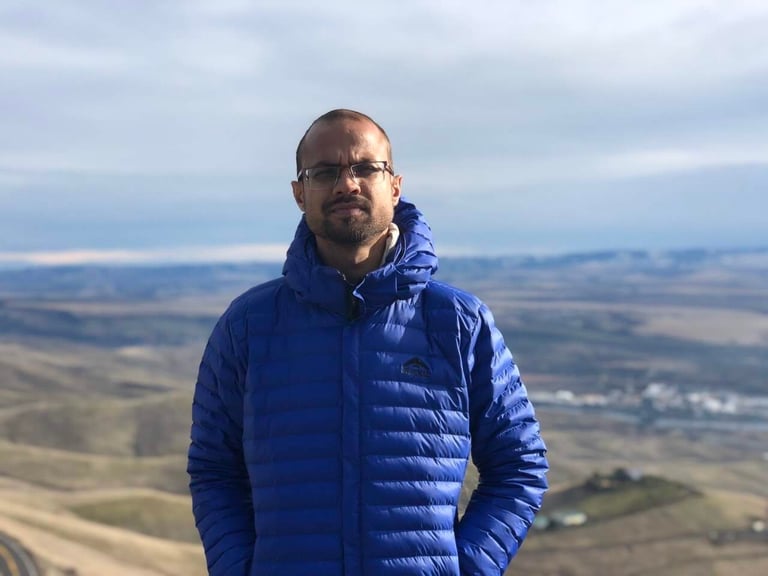
Rabindra Khanal
PhD in Physics/Material Science/Thin film Research
A Passionate Physicist with Research experience in nanomaterials and strong interest in semiconductor industries
Introduction
A Physics PhD graduate with expertise in nanoscience and nanotechnology, specializing in soft magnetic nanocomposite thin films. My research focuses on thin film fabrication, process optimization, and characterization of thin films to understand structure-property relationships in advanced materials
Research Projects
Soft Magnetic Nanocomposite Thin Films
Developed Fe_Fe₃O₄ core-shell nanocomposite thin films using physical vapor deposition (PVD), focusing on optimizing deposition parameters to improve magnetic, electrical, and structural properties
Oblique Angle Deposition
Investigated the structure-property relationship of the soft magnetic nanocomposite films assembled by iron/iron oxide cluster impact at different voltages and at different oblique angles (15, 30, 60, 90)
Experience
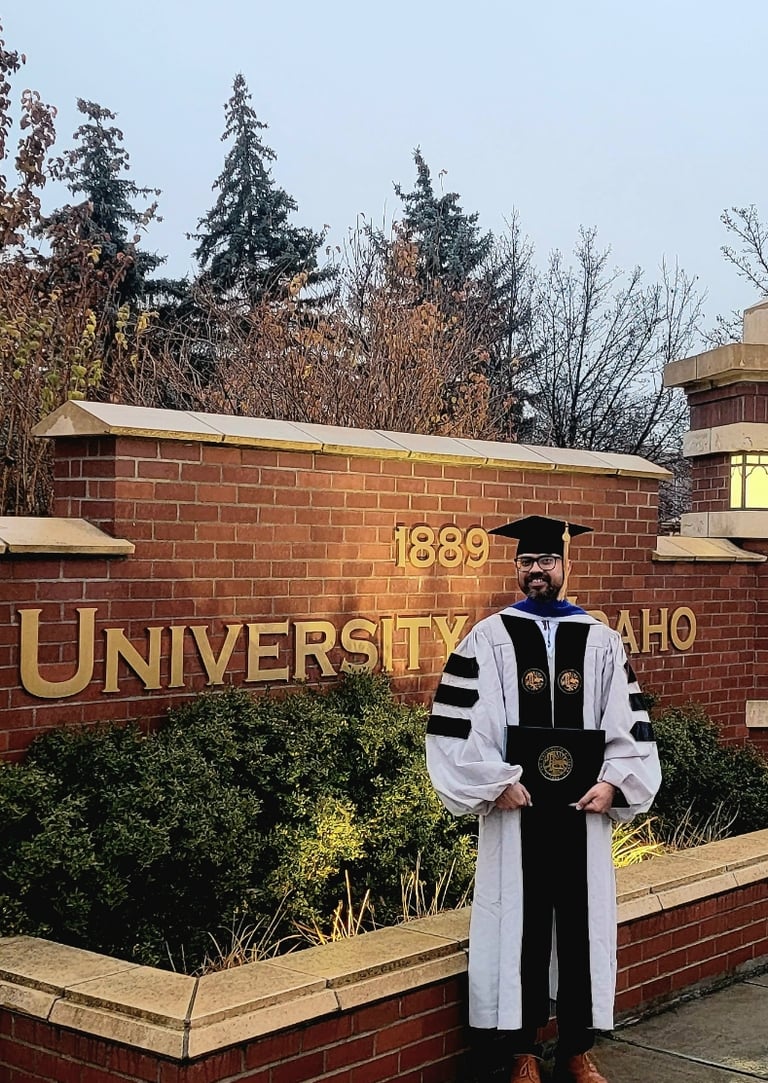
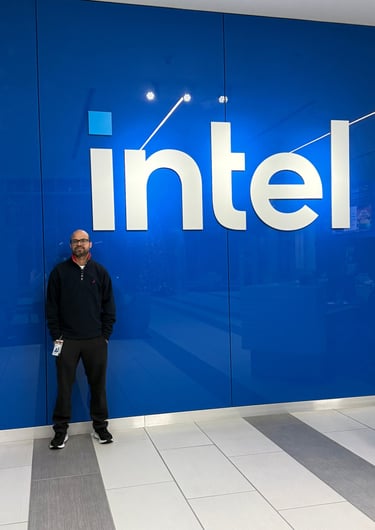
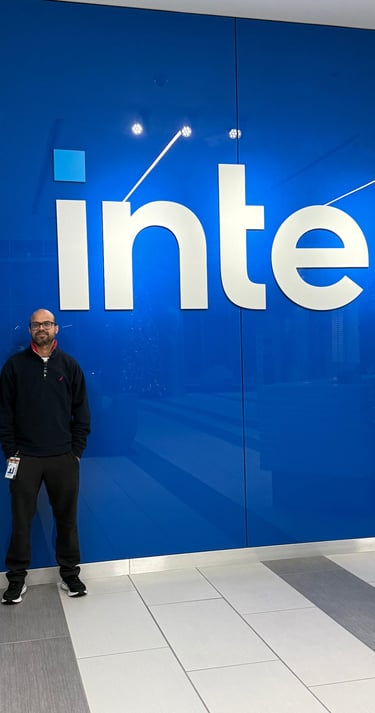
I have research experience from my PhD at the University of Idaho, where I worked on developing and characterizing nanocomposite thin films. In addition, I have industry experience as a Process Engineer at Intel, where I gained hands-on experience in process engineering and working in a high-tech manufacturing environment
Skills
Material Process and Fabrication: Plasma Enhanced Chemical Vapor Deposition (PECVD), Magnetron Sputtering System-Gas Aggregation Technique for Nanocluster Film Synthesis (PVD), Thin Film Fabrication and Quartz System for Deposition Rate Measurement
Vacuum Technology: Ultra High Vacuum, Leak Detection and Gas Flow Control
Material Characterization Techniques: Transmission Electron Microscopy, Scanning Electron Microscopy, Vibrating Sample Magnetometer (VSM), X-ray Diffraction, Atomic Force Microscopy (AFM), Four Probe resistivity method
Process and Quality Control: Statistical Process Control (SPC), Fault Detection and Classification (FDC), Root Cause Analysis, Manufacturing Execution System (MES)
Optical Imaging Technique: Integrative imaging system combining spatial light interference microscopy for QPI with an Airy beam light sheet for 3D fluorescent imaging.
Microfluidics Technology: Microfluidics for Immunoassays, Flow Cytometry, Sample Injection in Mass Spectrometry
Cell Culturing Technique: Biological Safety Cabinet, Safety Incubator Shaker